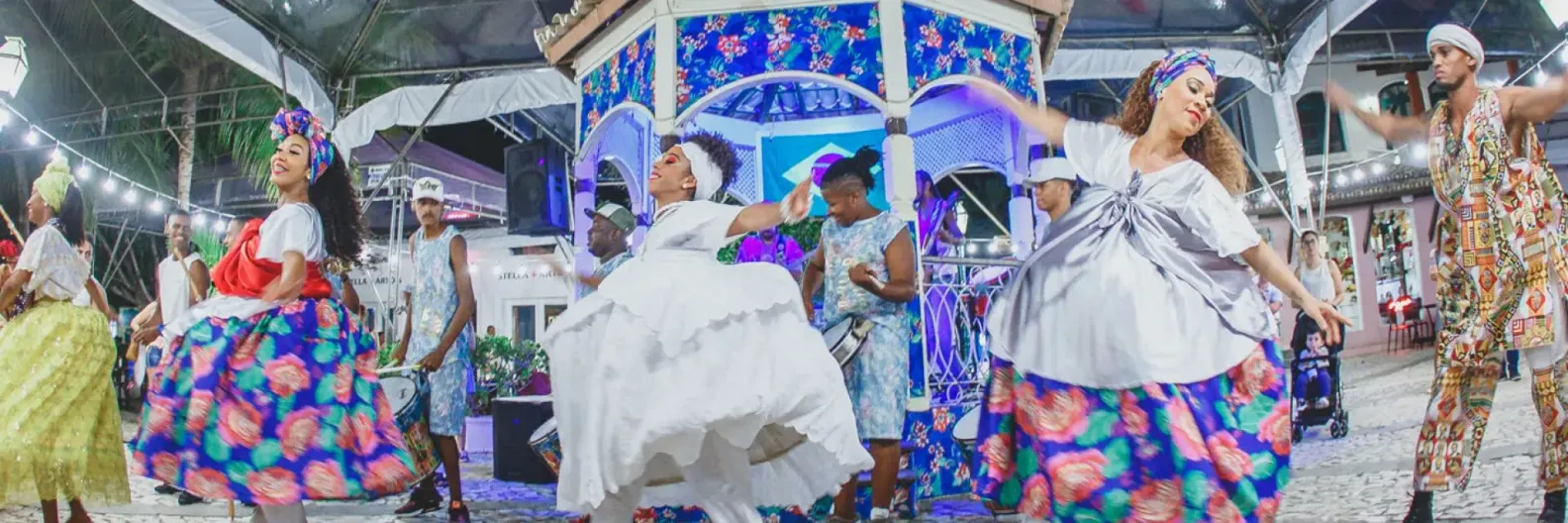
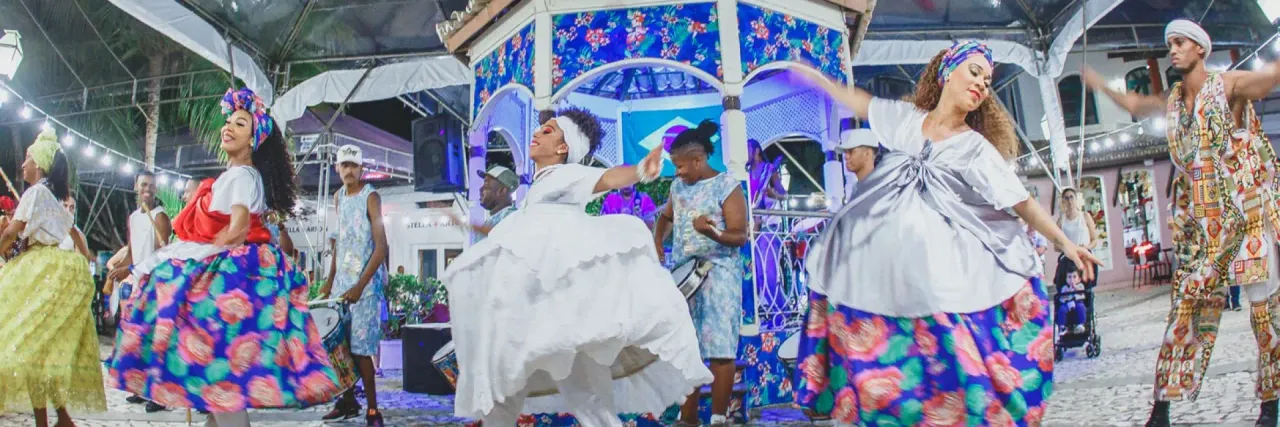
The dances of Bahia are a cultural manifestation of the state filled with a lot of animation. Through rhythms and clothing, they transmit all the energy, receptivity, and passion of the Bahian
people. Bahian dances have a strong African and indigenous influence, thus creating a mix of movements that represent the history and culture of their inhabitants and ancestors.
So, how about knowing a little more about Bahia dances? Check below what are the main types of choreographies that cheer up these good-hearted people!
1.Baião
This is one of the region's best-known rhythms. Baião is the sung dance that mixes indigenous, Portuguese and African elements. The musical construction is carried out using instruments such as the recorder, triangle, caipira viola and accordion. With its lively and striking melody, Baião left the Northeast and won
Brazil. The Baião rhythm consists of several movements performed, such as swings, twirls, and other steps. Another striking feature of Baião is its cheerful costume, always with bright colors, lots of flowers and
round skirts. 2. Maculelê
Maculelê is one of Bahia's folk dances with indigenous and African roots. With a lively rhythm, maculelê originated at the time of colonial Brazil, as a kind of martial fight with sticks practiced by enslaved people in the sugarcane fields
. With lively and engaging music, the dance is always performed with men and women who dance with sticks and play instruments such as tambourines and atabaques, always responding to the command of Macota, a master of ceremonies who coordinates the movements of the performance.
3. Samba de Roda
Another typical dance in the state of Bahia is the samba de roda. The rhythm appeared in the 19th century, receiving elements such as applause, guitar, tambourine and cuíca, bringing together striking elements of Angolan culture and uniting them with Portuguese
musical elements. Samba is a mix of dance, capoeira and the cult of Orixás, resulting in a cultural mix that, years later, ended up reaching the entire country. It's no wonder that, in 2013, the rhythm was awarded the title of Cultural Heritage of Brazil by the National Historical and Artistic Heritage Institute (IPHAN
). 4. Samba-reggae
We can't talk about typical Bahia dance without mentioning samba-reggae. Originated in the 80s by conductor Neguinho do Samba, from the Olodum block, the rhythm is a mix of samba and Jamaican reggae. Samba-reggae became a national and international success, becoming a trademark of the state
of Bahia. The construction of samba-reggae consists of a percussion base, composed of elements such as atabaques, drums, electronic viola and guitar. The immersive melody captivated renowned artists, such as Michael Jackson, who, during his time in Brazil, visited the Bahian capital and incorporated the elements of samba-reggae into one of his songs
. 5. Axé
Another of the Bahia dances that Brazil won is the axé. Originating in the 80s, the rhythm is composed of elements of maracatu, frevo, reggae and forró, and is one of the main attractions of the Bahian Carnival. The expression axé means “positive energy”, a term used as a greeting in Candomblé
and Umbanda. The lively rhythm gained the name of axé music over the years, representing the international origins in the construction of the melody. It's no wonder that the bustle and the striking choreography of this example of Bahia dances
conquered Brazil. Enjoy the Bahian rhythms in Costa do Sauípe!
Located on the northern coast of Bahia, Costa do Sauípe is the perfect place to discover the best of Bahia! In addition to offering the best beaches and pools in the region, it is also possible to enjoy various artistic and cultural activities within the complex
. Not to mention the opportunity to taste the flavors of Bahia, with a gastronomic itinerary filled with delicious regional cuisine. Take advantage of your vacation to take a special trip to the northern coast of Bahia in Costa do
Sauípe. Check out our promotional packages and come and experience unforgettable moments at one of the best all-inclusive resorts in South America. Enjoy!