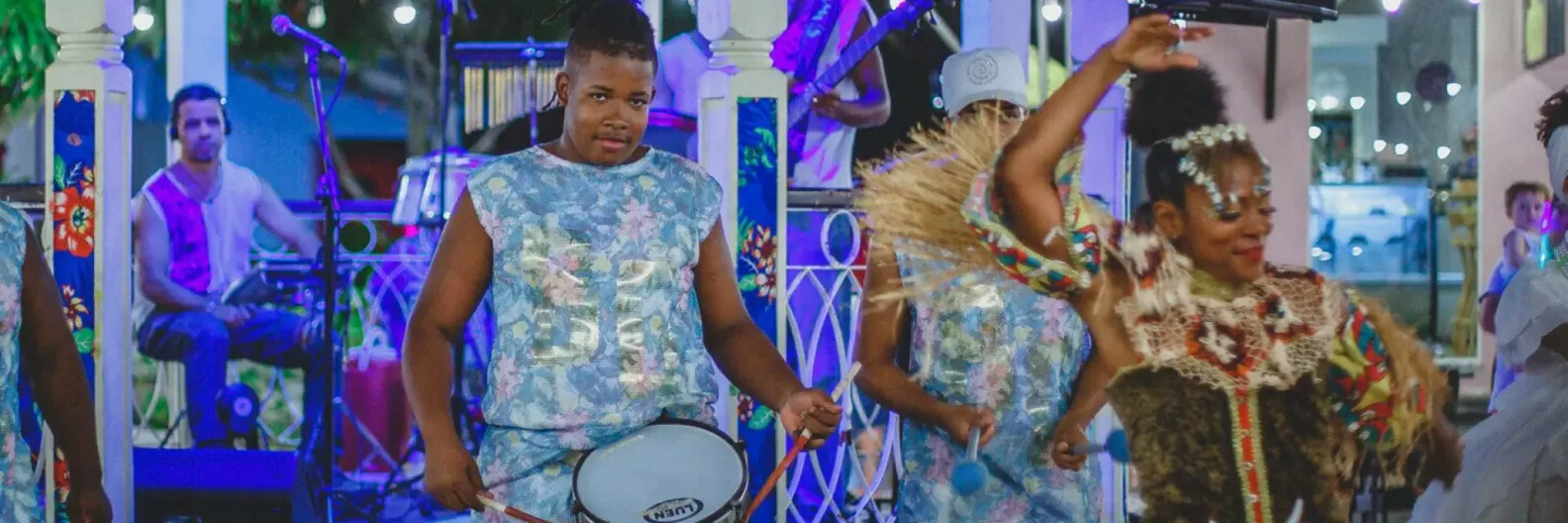
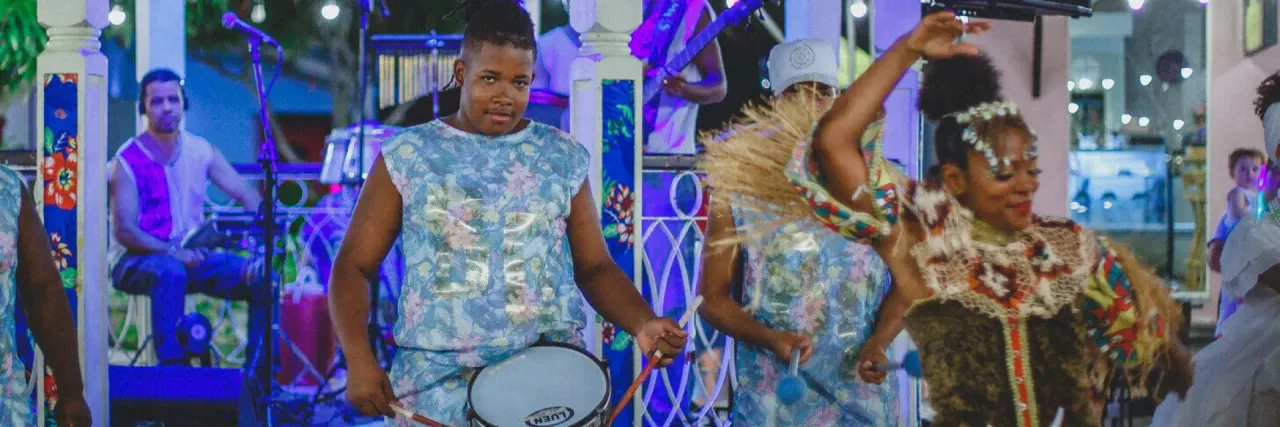
Bahia folklore is the cultural representation of the customs and traditions of the Bahian people, and is present in habits, rhythms, clothing, and even in cuisine. Always praising and preserving part of its origins to the present day. And the state of Bahia is one of the regions filled with diverse cultural elements
. Each region of the state contributes significantly to building Bahian folklore. For this reason, we have separated a list of some of Bahia's folklore habits for you to discover and appreciate during your tour of the region. Check it out!
1. Maculelê
Maculelê is one of the rhythms of Bahian culture that has indigenous and African roots, much practiced by blacks during the period of Colonial Brazil. This artistic expression has been present in the state for over 100 years, always being developed with strong men who interact with sticks in a kind of struggle
. Maculelê shows are usually staged together with lively music of African origin, to the sound of instruments such as the atabaque and the tambourine. This Bahian folklore activity is usually practiced mainly in the city of Santo Amaro da Purificação.
2. Bumba Meu Boi
Bumba Meu Boi is part of Bahia's Brazilian folklore and is also practiced in other regions of the country, such as the Amazon region and Santa Catarina. According to historians, the Bumba Meu Boi dance appeared in the 17th century and was practiced by slaves and
manual workers of the time. The show involves a dancer representing the figure of a cowboy, who performs some confrontations with an ox, and who, shortly after, ends up leaving the scene and is “wounded” by two other colleagues. The scene represents the legend of Bumba Meu Boi, in which a powerful cowboy's favorite animal
is resurrected. 3.Capoeira
One of Bahia's folk dances is capoeira, an artistic and cultural expression also considered a martial art. Its origin occurred as a fighting training so that slaves could defend themselves against the aggressions suffered
. So that the masters would not be suspicious, the slaves made a circle and, to the sound of the berimbau, made various dance and fighting movements. Over the course of history, the sport ended up conquering not only the country, but the entire world, gaining international visibility
. 4.
Another legacy from the time of colonization is the pole pull, an expression of Bahia's culture and regional folklore. The event is held annually, always in the first week of January in the city of Ilhéus. In it, the town pays homage to São Sebastião
. The first pole pulls were carried out by the indigenous people, as a kind of penance, crying out to the gods for protection from all the ills that afflicted humanity. Today, the event has become a tradition in the state and is the region's main folk festival
. 5. Caboclinhos
One of Bahia's cultural folklore activities to honor their ancestors are caboclinhos. In the movement, some people dress up as Indians, with arrows and musical instruments, representing the indigenous figure at Carnival.
Caboclinho groups are generally composed of a personalization of chieftain, master, and quartermaster. The group parades through the streets of the region, always representing actions and movements of indigenous musicians and warriors
. Discover the culture of Bahia in Costa do Sauípe!
Located on the northern coast of Bahia, the Costa do Sauípe hotel complex offers cozy accommodations, ideal for every type of trip, whether as a couple, alone or with the whole family. In addition, you can also enjoy the best beaches and pools in the region.
There, it is also possible to enjoy various artistic, cultural, and gastronomic activities of the Bahian culture. All with the convenience of the all-inclusive system, which includes drinks and food in the package price
. Check out our promotional packages and come and enjoy an incredible vacation on the Bahian coast.