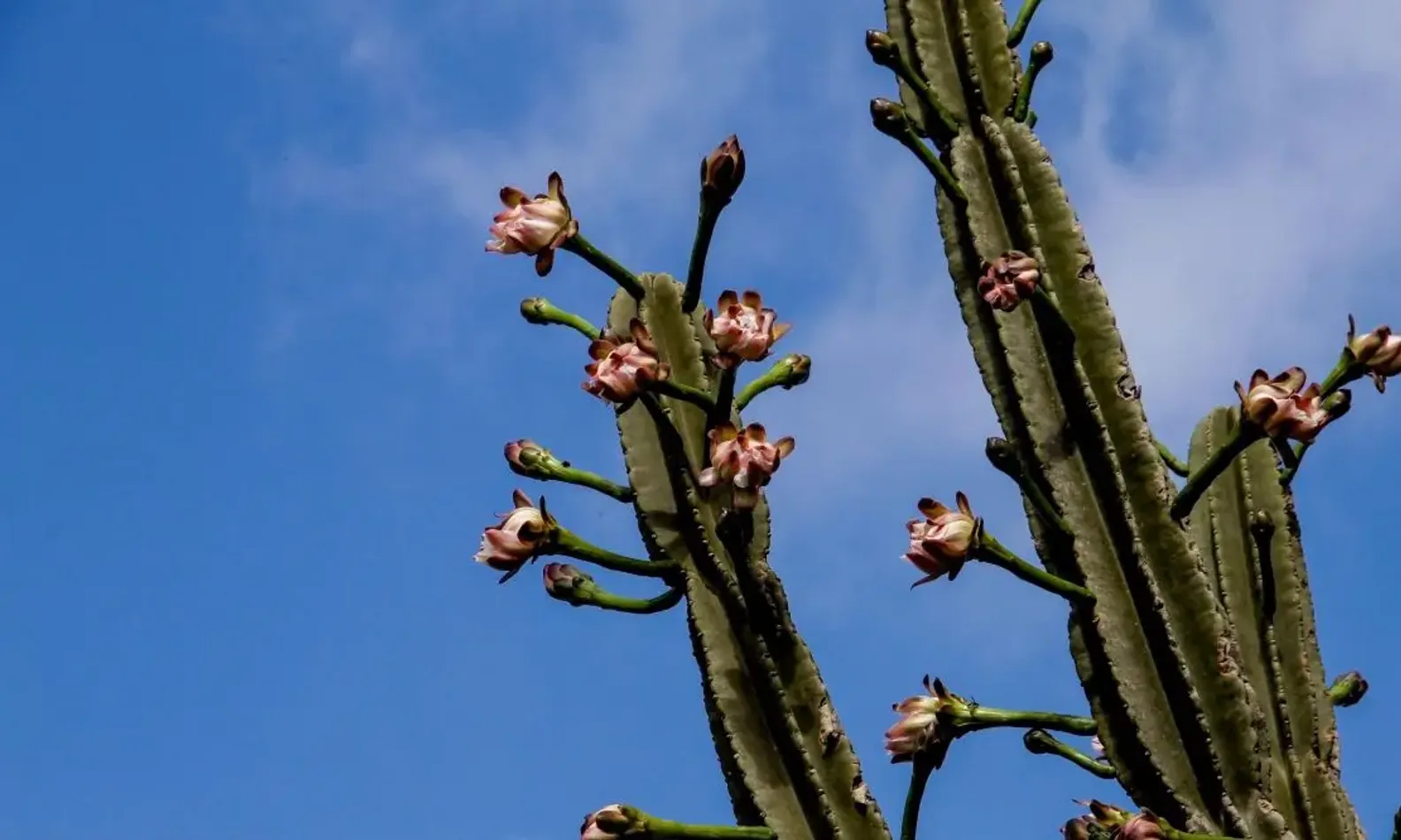
How do you know Mandacaru? Because the plant is well known as jamacaru, mandacaru de boi, lamb, cumbaba, koubo, night princess, among other names and nicknames
.Regardless of how you know it or if you've heard of it, the cactus species is fascinating, not least because, if the subject is Northeastern culture, there's not much to be different. And if you follow us here, you already know that our business is to take you to learn more about the cultural aspects of this region!
Therefore, continue with us to discover more about the plant and why it is a symbol of resistance in the Brazilian Northeast and has inspired songs, poems and a lot of beautiful twine. Shall we go?
Mandacaru: origin of this cactus that has a unique flower
As we have already given a spoiler, you must have discovered that the mandacaru is native
to Brazil, right?That's right! Furthermore, the species is adapted to the climatic conditions of the semiarid region, caatingas and savannas. It is interesting to know that the species is also present in Israel - known as koubo, and also native to Peru
.One thing is certain: the arid landscapes are marked by the marked presence of the Mandacaru! In fact, this most popular name here in Brazil means “tree with thorns”, coming from Tupi origin
.Discover the legend of the Mandacaru flower Now, speaking of the Mandacaru
's appearance, it is very likely that you have seen it in the landscapes of the region during a car trip, especially to the Brazilian Northeast, or at someone's house as part of the decoration, have you
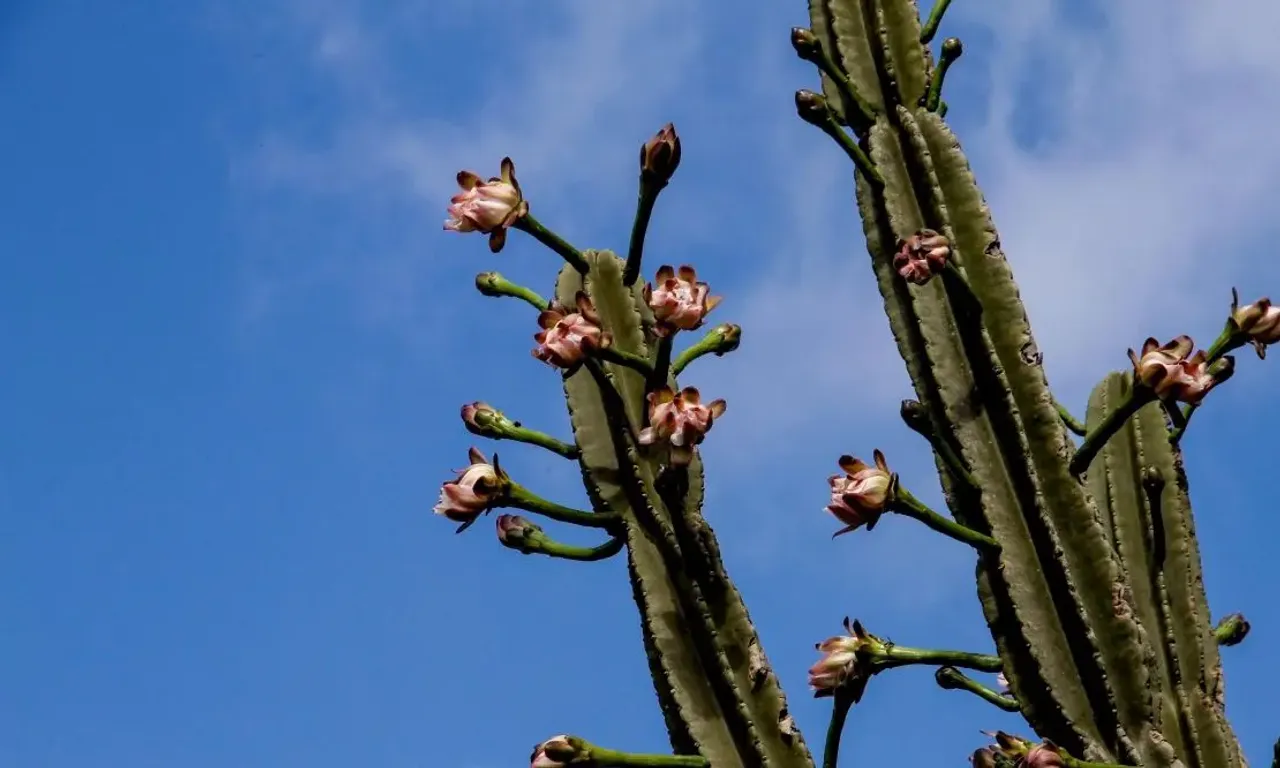
seen?The Mandacaru cactus is tall and columnar - its height can vary from 5 to 12 meters when in its natural habitat. Curiosity: in the savanna, it is generally smaller, being between 3 and 5 meters. Like most cacti, they have sharp spines to protect themselves from excessive water loss and possible predators, in addition to forming beautiful large, white flowers!
There is a legend that accompanies its flowers, even.
The writer Cláudio Leite was inspired and wrote the poem called “Getting to Know the Mandacaru” l:
“Pray the belief and the popular legend, that whenever the Mandacaru flower blooms, from the heavens, rainwater will spring up, for the soil to water and irrigate, making life germinate.
”
In fact, the large white flowers of mandacaru emerge only during the dry period. Now, there is no scientific proof that the blooming of the flowers actually means that it will rain, but for that very reason, it is a great representation of Northeastern faith, perseverance,
and resistance!Mandacaru frequently appears in literature, music, and visual arts in the Northeast, where it is portrayed as a symbol of strength, endurance, and the ability to overcome difficulties. His figure is intrinsically linked to the cultural identity and to the history of struggle and perseverance of the
Northeastern people.Mandacaru fruit: check out the characteristics of this herbal medicine with many benefits
Over time, mandacaru
flowers give way to edible fruits. Known as figs from hell or mandacaru cashews, they are super nutritious. They can be consumed fresh, used to prepare candies, jams and juices, offering a food source for local
populations.Mandacaru is used in Northeastern folk medicine to treat a variety of conditions, including digestive problems, wounds, inflammation, and even as a diuretic. While the efficacy of these traditional uses needs further scientific study, they are an important part of popular knowledge.
The smell of the fruit is very similar to citrus fruits and is very pleasant both to eat and to use on the skin. There are several types of products made with mandacaru fruit, such as jams, liqueurs, food freeze-drying, cosmetics, and even anti-ulcer remedies
.Because it grows in arid and semiarid regions, mandacaru helps combat soil erosion. Its roots help to fix the soil, reducing the impact of erosion caused by wind and water
.The
green parts of the mandacaru can be used as forage for cattle, especially during dry periods when other food sources are scarce. This helps the animals survive in difficult times and the maintenance of the local economy based on livestock.
Have you tried it? It's worth it, you see!
The Mandacaru cactus carries with it a lot of Northeastern culture and history, which you can discover when staying at Costa do Sauípe!
I think it was possible to understand a little bit why mandacaru is much more than a plant, right? It is a powerful symbol of resistance, adaptation, and hope for the peoples of the Northeastern hinterland, representing their capacity to face and overcome the challenging conditions of
their environment.And since today we took you on another tour of the characteristics of our Northeast, how about extending the tour and taking a real taste of Bahia? Come to Costa do Sauípe!
Here, in addition to a lot of natural beauty and respect for the local fauna and flora, you can find typical dishes, handmade products made with regional fruits, incredible pools and lots of fun!